Traditional Tilachi Vadi Recipe
Introduction
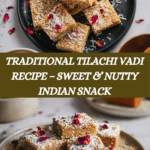
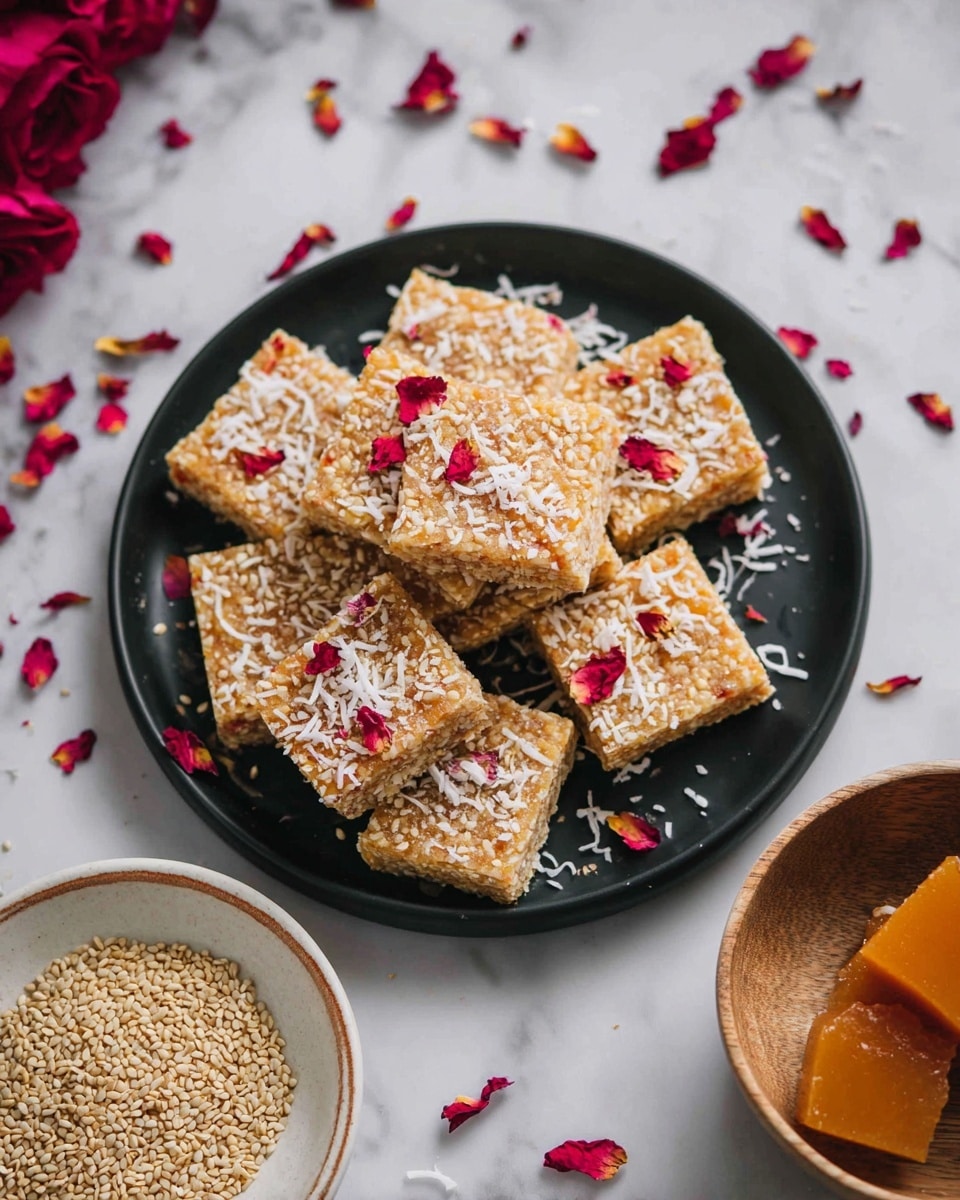
Traditional Tilachi Vadi is a delicious Indian sweet snack made with roasted sesame seeds, peanuts, jaggery, and fragrant spices. This crunchy treat carries a perfect balance of nutty and sweet flavors, making it an irresistible bite any time of day.
Ingredients
- 1 cup sesame seeds (brown sesame seeds recommended)
- ½ cup raw peanuts (preferably de-skinned)
- ¼ cup grated dry coconut (unsweetened dessicated coconut)
- 1 teaspoon ground cardamom
- ⅛ teaspoon nutmeg powder
- ⅛ teaspoon kosher salt
- 1½ cups Kolhapuri jaggery (grated using a food processor or hand grater)
- 2 tablespoons water
- 2 teaspoons ghee
- 1 tablespoon shredded dry coconut (unsweetened dessicated coconut, for garnish)
- 1 tablespoon edible dried rose petals (for garnish)
Instructions
- Step 1: Line a baking sheet or cutting board with parchment paper. If parchment is unavailable, grease the surface with ghee to prevent sticking.
- Step 2: Dry roast sesame seeds in a non-stick pan over medium heat for 3 to 5 minutes until they start to pop and release a nutty aroma. Transfer them to a bowl and let cool.
- Step 3: Using the same pan, roast the peanuts on medium heat for 2 to 3 minutes until light brown spots appear. Cool in a bowl. If using peanuts with skin, remove and discard skins once cooled.
- Step 4: Roast the grated dry coconut in the pan for about a minute until lightly browned. Remove promptly and cool in a separate bowl.
- Step 5: Process the cooled sesame seeds in a food processor until coarsely ground. Repeat this step separately for peanuts and dry coconut, then combine all ground ingredients in a medium bowl.
- Step 6: Add cardamom, nutmeg, and salt to the bowl and mix well to distribute the spices evenly.
- Step 7: Wipe the pan clean with a dry paper towel. Add ghee, grated jaggery, and water. Cook on low heat until jaggery fully melts and bubbles with a foamy white top. Remove from heat and stir in the sesame seed mixture immediately.
- Step 8: Pour the hot mixture onto the parchment-lined board. Quickly spread it into an 8 x 8-inch square using a silicone spatula or a ghee-greased rolling pin. Even out the sides to form a neat square.
- Step 9: Garnish with shredded dry coconut and edible dried rose petals. Press gently with the spatula or rolling pin to set the decoration into the mixture.
- Step 10: While still warm, cut the mixture into small 1 to 2-inch squares (Vadi). Let them cool for 10 minutes before carefully separating the pieces.
- Step 11: Store the Tilachi Vadi at room temperature in an airtight container for up to 2 weeks.
Tips & Variations
- Use de-skinned raw peanuts to ensure a smooth texture and avoid bitterness.
- For a richer flavor, lightly toast the cardamom powder before adding it to the mixture.
- Substitute jaggery with dark brown sugar if jaggery is unavailable, though the flavor will be less authentic.
- Add a pinch of black pepper or chili powder for a subtle spicy kick.
- Use a silicone spatula for spreading the mixture evenly without sticking.
Storage
Store Tilachi Vadi in an airtight container at room temperature. They stay fresh and crunchy for up to 2 weeks. If they soften, briefly warm them in a low oven or on a dry skillet before serving to restore crispness.
How to Serve
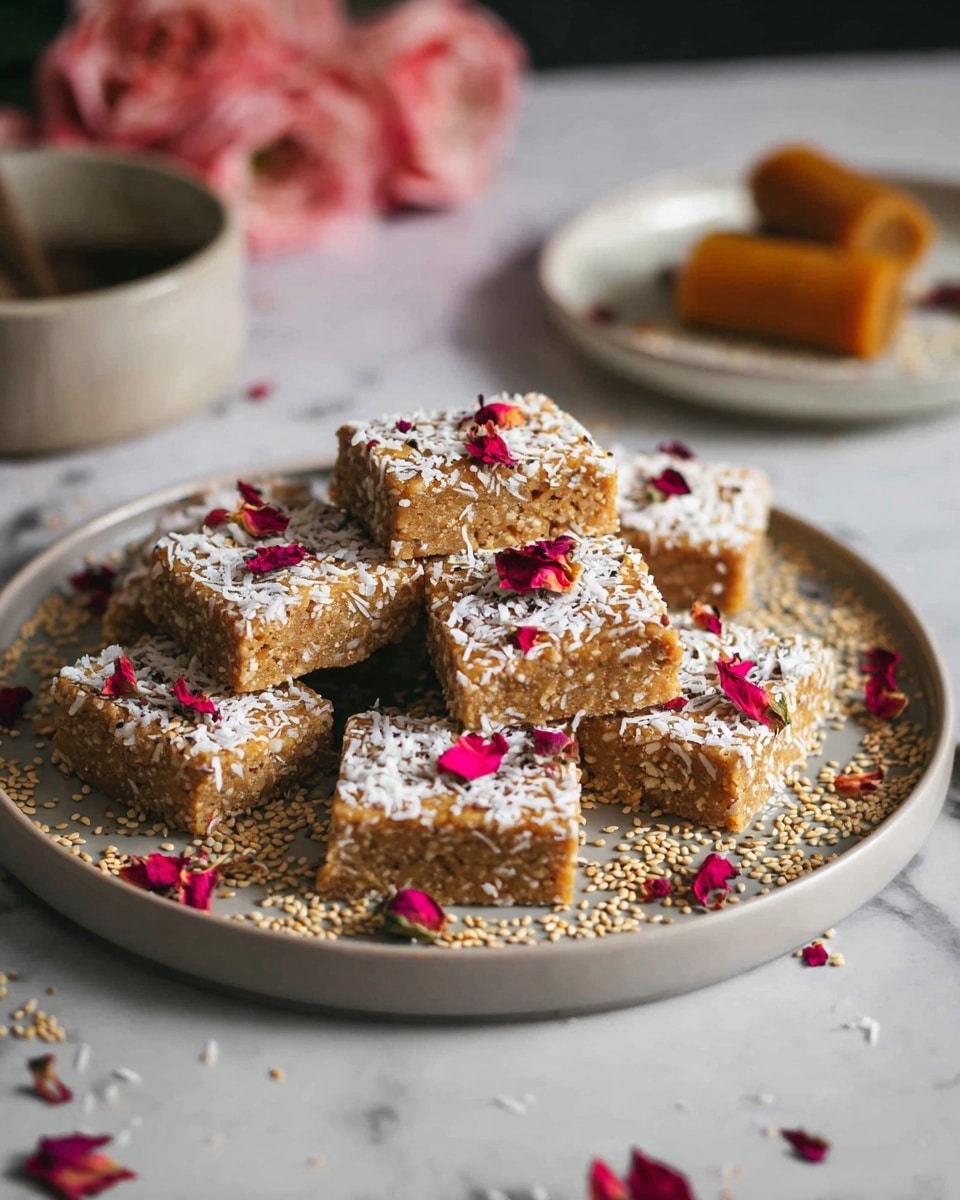
Serve this delicious recipe with your favorite sides.
FAQs
Can I make Tilachi Vadi vegan?
Yes, you can substitute ghee with coconut oil or any other vegetable oil, though this may slightly alter the traditional flavor and texture.
What is the best way to serve Tilachi Vadi?
Tilachi Vadi is great as a snack on its own or paired with tea or coffee. It also makes a lovely festive treat or gift.
PrintTraditional Tilachi Vadi Recipe
Traditional Tilachi Vadi is a delicious and aromatic sweet snack from Kolhapur, India, made with roasted sesame seeds, peanuts, dry coconut, and jaggery. This treat combines warm spices like cardamom and nutmeg with the natural sweetness of jaggery, resulting in a chewy, nutty delight perfect for festivals or everyday indulgence.
- Prep Time: 20 minutes
- Cook Time: 15 minutes
- Total Time: 35 minutes
- Yield: Approximately 24 pieces 1x
- Category: Snack
- Method: Stovetop
- Cuisine: Indian
Ingredients
Dry Ingredients
- 1 cup sesame seeds (brown sesame seeds preferred)
- ½ cup peanuts (raw, preferably de-skinned)
- ¼ cup grated dry coconut (unsweetened dessicated coconut)
- 1 teaspoon ground cardamom
- ⅛ teaspoon nutmeg powder
- ⅛ teaspoon kosher salt
Sweetening & Cooking Ingredients
- 1½ cups Kolhapuri jaggery (grated using a food processor or hand grater)
- 2 tablespoons water
- 2 teaspoons ghee
Garnish
- 1 tablespoon shredded dry coconut (unsweetened dessicated coconut)
- 1 tablespoon edible dried rose petals
Instructions
- Prepare the surface: Line a baking sheet or cutting board with parchment paper. If parchment paper is unavailable, grease the surface generously with ghee to prevent sticking.
- Roast sesame seeds: Heat a non-stick pan over medium heat and dry roast the sesame seeds for 3 to 5 minutes until they begin to pop and emit a fragrant aroma. Transfer them to a bowl and let cool.
- Roast peanuts: In the same pan, dry roast the peanuts on medium heat for 2 to 3 minutes until light brown spots appear. Allow to cool in a bowl. If peanuts have skins, remove and discard them once cooled.
- Roast dry coconut: Roast the grated coconut in the same pan for about 1 minute until light golden brown, then transfer to a bowl to cool.
- Grind dry ingredients: Using a food processor or blender, pulse the cooled sesame seeds until they become a coarse powder. Repeat this process separately with the peanuts and the roasted coconut. Combine all ground nuts and coconut in a medium bowl.
- Mix spices and salt: Add ground cardamom, nutmeg, and kosher salt to the nut and coconut mixture. Stir well to combine all ingredients evenly.
- Melt jaggery syrup: Wipe the pan clean and add ghee, grated jaggery, and water. Heat on low until the jaggery melts completely and the mixture becomes foamy and bubbling on top. Remove from heat promptly.
- Combine mixture: Stir the jaggery syrup into the nuts and spices mixture thoroughly, ensuring everything is well-coated and sticky.
- Shape the vadi: Quickly pour the mixture onto the prepared parchment-lined surface. Use a silicone spatula or a ghee-greased rolling pin to spread the mixture into an even 8 x 8-inch square. Smooth the edges evenly to form a neat square shape.
- Garnish: Sprinkle shredded dry coconut and dried rose petals over the surface, pressing them gently into the mixture using the rolling pin or spatula for good adherence.
- Cut while warm: While the mixture is still warm but firm enough to cut, slice it into small squares about 1 to 2 inches in size (called Vadi).
- Cool and store: Allow the cut pieces to cool completely for 10 minutes before separating. Store the Tilachi Vadi in an airtight container at room temperature for up to 2 weeks.
Notes
- Use raw, de-skinned peanuts for the best texture and flavor; removing the skins is easier after roasting.
- Spread and cut the mixture quickly before it hardens to maintain shape and ease of cutting.
- This recipe uses Kolhapuri jaggery, which has a distinct flavor; other jaggery types may be substituted but will slightly alter taste.
- Ghee can be substituted with a neutral oil if needed, but ghee adds authentic richness.
- Store vadi in an airtight container to keep it fresh and prevent moisture absorption.
Keywords: Tilachi Vadi, Kolhapuri sweets, sesame jaggery snack, Indian traditional recipe, dry fruit vadi